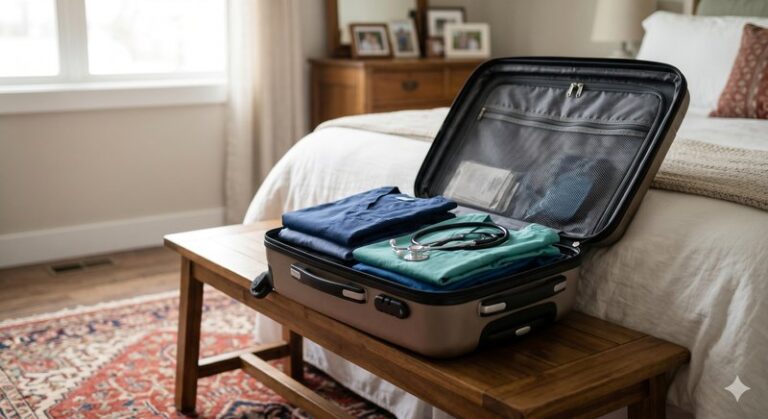
Nursing Jobs in Texas: Your Complete Guide
Nursing Jobs in Texas: Why Every Nurse Should Consider the Lone Star State
I’ll never forget the day my colleague Sarah texted me from Houston: “Just accepted an RN position here. NO STATE INCOME TAX. I’m basically getting a $6k raise for doing nothing.”
She wasn’t wrong.
Texas has this weird magnetic pull for nurses right now, and it’s not just about the money (though yeah, that’s a big part of it). Whether you’re a new grad trying to figure out your first move or a seasoned ICU nurse who’s fed up with your current hospital system, Texas keeps popping up as an option worth exploring.
So let’s talk about what nursing jobs in Texas actually look like in 2024 — the good, the challenging, and the downright surprising.
Why Texas? The Draw for Nurses Right Now
Here’s the thing: Texas isn’t just throwing money at nurses (though they kind of are). The state’s got a perfect storm of factors making it attractive:
The financial picture matters. No state income tax means your paycheck goes further. A $75,000 salary in Texas feels more like $80,000+ compared to California or New York. I’ve watched nurses make the move and immediately feel less stressed about money, which honestly affects everything else in your life.
The job market is massive. We’re talking about the second-largest state by population with major metro areas like Houston, Dallas, Austin, and San Antonio. The Texas Medical Center in Houston? It’s literally the largest medical complex in the world. You won’t struggle to find openings.
Growth is everywhere. People keep moving to Texas. More people means more patients, which means healthcare systems are constantly expanding and hiring. Job security isn’t really a question here.
What Kinds of Nursing Jobs Can You Actually Find?
The variety surprised me when I first started researching this. Texas isn’t just bedside hospital nursing (though there’s plenty of that).
Hospital systems are the big players. HCA, Memorial Hermann, Baylor Scott & White, Methodist — these systems run multiple hospitals and they’re always hiring. You’ll find everything from small community hospitals to level-one trauma centers. New grads can usually land acute care positions without too much trouble.
Travel nursing exploded here. Even post-pandemic, Texas continues to be a hot spot for travel contracts. The rates have cooled down from the crazy 2021-2022 highs, but you can still pull $2,500-3,500 weekly for the right specialty. Plus, on top of that housing stipend, you’re pocketing more since there’s no state tax.
Specialty areas are wide open. Looking for NICU? Houston’s got you covered. Want to work in oncology? MD Anderson is right there. Psych nursing? Texas has been investing heavily in mental health facilities. Surgical centers, outpatient clinics, school nursing, correctional nursing — it’s all here.
Home health and telehealth keep growing. If you’re burned out on bedside, Texas has robust home health agencies and telehealth companies. The state’s so spread out that virtual nursing has become essential for rural communities.
Let’s Talk Numbers: What You’ll Actually Make
Money isn’t everything, but it sure helps pay off those student loans.
The average RN salary in Texas hovers around $77,000-82,000 annually, but that’s kind of misleading because it varies wildly by city and specialty. Here’s what I’m seeing in 2024:
- Houston: $75,000-90,000 for med-surg, higher for ICU/ER
- Dallas-Fort Worth: $72,000-88,000 depending on facility
- Austin: $78,000-92,000 (higher cost of living, slightly higher pay)
- San Antonio: $70,000-85,000 (lower cost of living, best bang for your buck)
- Rural areas: $65,000-75,000 (but housing costs are dirt cheap)
Critical care nurses, CRNAs, NPs, and specialty certifications can push you well into six figures. I know ER nurses in Dallas clearing $95k with shift differentials and weekend incentives.
On top of that base pay, most Texas hospitals offer sign-on bonuses ranging from $5,000 to $20,000 right now. The staffing shortage hasn’t magically disappeared, so hospitals are still competing for talent.
The Licensure Situation: Easier Than You Think
Texas is part of the Nurse Licensure Compact (NLC), which is honestly a game-changer. If you’ve already got a compact license from another state, you can start working in Texas pretty much immediately. No waiting months for endorsement paperwork.
If you’re coming from a non-compact state like California or New York, you’ll need to apply for licensure by endorsement through the Texas Board of Nursing. It’s not terrible — usually takes 2-4 weeks if you’ve got all your documents ready. Just budget for the fees and don’t wait until the last minute.
Here’s a tip I learned from a recruiter friend: start your application before you even accept a job offer. By the time you’re ready to relocate, your license should be processed.
Cities Breakdown: Where Should You Actually Go?
Houston is humid as hell but pays well and never runs out of opportunities. The diversity is incredible, both in patient populations and job options. If you want big-city nursing with every specialty imaginable, Houston won’t disappoint. Just prepare to deal with traffic and summer temps that feel like you’re walking through soup.
Dallas-Fort Worth gives you that metropolitan vibe with slightly more bearable weather. The hospital systems here are huge and constantly expanding. I think DFW is perfect for nurses who want career advancement opportunities — there’s always another rung on the ladder to climb.
Austin is where all the California nurses seem to end up. It’s cooler (culturally, not temperature-wise), younger, and honestly a bit more expensive than other Texas cities. Great work-life balance though, and if you’re into outdoor activities between shifts, you’ll love it.
San Antonio doesn’t get enough credit. Lower cost of living, strong military medicine presence (hello, BAMC), and a solid quality of life. If you’re a nurse with a family trying to buy a house, San Antonio might be your sweet spot.
El Paso and other border communities offer unique experiences, especially if you’re bilingual. The cultural richness is amazing, and you’ll develop skills working with underserved populations that you can’t get anywhere else.
The Social Media Buzz: What Nurses Are Really Saying
Nurses on X have been talking a lot about nursing jobs in Texas lately, and the conversation’s pretty interesting. A recent viral thread from a California ICU nurse documented her move to Dallas, breaking down actual cost-of-living differences. She calculated she was saving about $1,400 monthly compared to Los Angeles — same job, same specialty, way better financial position.
But it’s not all sunshine. Another thread from a Houston nurse went viral discussing mandatory overtime policies and nurse-to-patient ratios. Texas doesn’t have mandated ratios like California, so some hospitals push the limits. The comment section filled up fast with nurses sharing their experiences — some praising their Texas hospitals for reasonable assignments, others warning about facilities that consistently understaff.
Here’s what I’ve noticed across these discussions: nurses who do their homework and ask the right questions during interviews tend to be happy with their move. Those who just chase the paycheck without vetting the specific hospital culture? They often end up frustrated.
The Challenges Nobody Talks About (Until You’re Already There)
I’d be lying if I said Texas nursing is perfect. Let’s get real about some downsides.
Nurse-to-patient ratios aren’t mandated. California nurses moving to Texas often experience sticker shock when they’re assigned six or seven patients on a med-surg floor. You’ve got to ask specific questions during your interview about typical assignments and acuity levels.
The heat is legit oppressive. If you’re walking to your car after a 12-hour shift in August, you’ll understand why every nurse carries a water bottle the size of a small child. It’s not just uncomfortable — it affects how you feel outside of work.
Healthcare can feel more corporate here. Big hospital systems run things, and sometimes it shows. You might deal with more administrative red tape and corporate policies than you would at smaller facilities elsewhere.
Political climate matters to some. Texas is conservative, which affects healthcare policy, reproductive health services, and workplace culture in some facilities. If that’s important to you (and it’s totally valid if it is), research the specific area and facility before committing.
Quick-Fire Questions I Always Get
“Can I work as a new grad in Texas?”
Absolutely. Texas hospitals hire tons of new graduates. Many have residency programs specifically designed for new nurses. Start applying 3-4 months before graduation.
“Is it hard to find PRN or per diem work?”
Not at all. The staffing needs are constant. Once you’ve got some Texas experience under your belt, you can easily pick up PRN shifts for extra cash or to try out different specialties.
“What about continuing education requirements?”
Texas requires 20 contact hours of continuing education every two years for license renewal. It’s pretty standard and not hard to meet. Many employers cover CEU costs.
“Will I be stuck in one hospital system?”
Nope. The market’s competitive enough that you’ve got options. Don’t like where you are? Start looking. Most nurses I know have leveraged job offers to negotiate better positions.
Making the Move: Practical Steps That Actually Work
If you’re seriously considering nursing jobs in Texas, here’s what I’d recommend:
Visit first if you can. I know it costs money, but spending a weekend in your potential new city will tell you more than any blog post can. Drive around different neighborhoods. Feel the vibe. Can you see yourself living there?
Join Texas nursing Facebook groups. Search for “[city name] nurses” and you’ll find active communities. Ask questions. People are surprisingly helpful about sharing which hospitals treat staff well and which ones to avoid.
Work with a recruiter who specializes in Texas. They know which hospitals have openings, which ones pay competitively, and which ones have retention problems (red flag). Good recruiters can fast-track your application.
Budget for moving costs but expect help. Many hospitals offer relocation assistance, but read the fine print. There’s usually a commitment period, and if you leave early, you might have to pay it back.
Get your ducks in a row financially. First month’s rent, deposit, setting up utilities, getting a Texas driver’s license — it adds up. Have at least $3,000-5,000 saved beyond your moving expenses.
My Honest Take After Watching Dozens of Nurses Make This Move
In my experience, nurses who relocate for Texas jobs fall into two camps: those who wish they’d done it sooner, and those who realize within six months it’s not for them.
The difference? Expectations.
If you’re moving solely for money and you hate heat, heavy traffic, and conservative politics, you’ll probably be miserable no matter how much you’re earning. But if you’re looking for career opportunities, financial breathing room, and don’t mind adapting to a different regional culture, Texas can be genuinely great for your nursing career.
I think the key is being honest with yourself about what you need and what you can tolerate. Some nurses thrive in the fast-paced, business-oriented healthcare environment here. Others miss the more laid-back or progressive atmospheres they left behind.
So… Should You Do It?
Look, only you can answer that. But if you’re even asking the question, you’re probably ready for a change.
Nursing jobs in Texas offer real opportunities — financial, professional, and personal. The market’s strong, the variety is there, and you won’t struggle to find work. Yes, there are trade-offs, but show me a state that doesn’t have those.
If you’re feeling stuck where you are, if you’re curious about what else is out there, or if you just want to keep more of your paycheck, Texas is worth serious consideration. Do your research, ask hard questions, and trust your gut.
And hey, if you end up making the move, I’d love to hear how it goes. Drop a comment or shoot me a message. We nurses have got to look out for each other, whether we’re in Texas, Timbuktu, or anywhere in between.
Now go figure out if the Lone Star State is calling your name. Just remember to pack deodorant and a really good water bottle. You’re gonna need both.